Fundamentals
Thermodynamic aspects of crystal growth (online)
Peter Rudolph, Crystal Technology Consulting, Germany
Peter Rudolph is emeritus of crystallography. He was professor at Humboldt-University of Berlin, visiting professor at Tohoku University in Sendai, and employed at Leibniz-Institute for Crystal Growth in Berlin. He dealt with semiconductor growth technologies and was awarded the IOCG Laudise Prize.
Nucleation and kinetics of crystal growth
Elias Vlieg, Radboud University, The Netherlands
Elias Vlieg is a professor in Solid State Chemistry at the Radboud University Nijmegen. He is the Chair of the ESRF Council and President of the International Organization for Crystal Growth (IOCG). His research goal is to obtain a fundamental understanding of the processes that occur during formation and growth of crystals and to apply this understanding to the prediction and control of crystal properties like perfection and morphology.
Crystal Growth Engineering
Bulk crystal growth (from the melt, PVT, solution)
Koichi Kakimoto, Tohoku University, Japan
Professor Koichi Kakimoto leads the Nanomechanics Research Group. His work focuses on crystal growth dynamics, semiconductor materials, and defect control in bulk single crystals, with applications in optoelectronics and low-power semiconductor devices. His projects include studies on silicon melt interface dynamics, thermoelectric (Seebeck) effects in crystal growth, and defect-controlled LN・LT crystals for optical communication devices. He is the member of multiple scientific societies (e.g., Japanese Association for Crystal Growth, the American Chemical Society).
Epitaxy (VPE, CVD, PVD, MBE, etc.)
Joan M. Redwing, Penn State University, USA
Joan M. Redwing received her B.S. in Chemical Engineering from the University of Pittsburgh and her Ph.D. in Chemical Engineering from the University of Wisconsin-Madison. After receiving her Ph.D., she was employed as a research engineer at Advanced Technology Materials, Inc. where she worked on the development of group III-nitride materials and devices. Dr. Redwing joined the faculty of the Department of Materials Science and Engineering at Penn State University in 2000. She holds an adjunct appointment in the Department of Electrical Engineering and is a member of the Materials Research Institute. She currently serves as Director of the 2D Crystal Consortium (2DCC), an NSF-funded Materials Innovation Platform national user facility. Dr. Redwing's research interests are in the general area of electronic materials synthesis and characterization with a specific emphasis on semiconductor thin film, nanowire and 2D materials synthesis by metalorganic chemical vapor deposition. She currently serves as vice president of the American Association for Crystal Growth, is an associate editor for the Journal of Crystal Growth and is the North American regional editor for the journal 2D materials. She is a fellow of APS, MRS and AAAS and was a Fulbright Scholar to Sweden in 2016. She is a co-author on over 300 publications in refereed journals and holds 8 U.S. patents.
Defect engineering (various defects, impact of growth process on defects…)
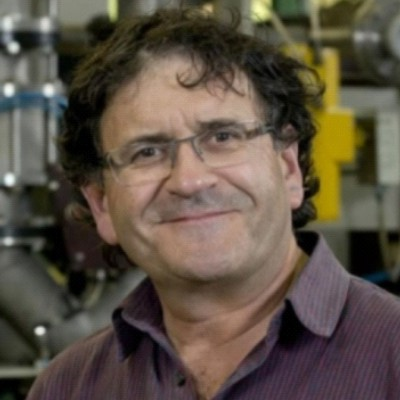
Thierry Duffar, Grenoble Institute of Technology, France
Professor Thierry Duffar is an Exceptional Class University Professor at Grenoble Institute of Technology, France, and serves as the Scientific Director for Energy and Materials at the institute. He holds a Ph.D. in Materials Science (1982) and a Habilitation (1999) from Grenoble. His research focuses on optimizing crystal growth processes, including Bridgman, Czochralski, and zone melting techniques, with applications in photovoltaic silicon and other materials. He serves on executive committees for the International Organization of Crystal Growth and the International Union of Crystallography, among others. He has authored 140 peer-reviewed papers, 12 patents, and 20 invited lectures, and has edited the book Crystal Growth Processes Based on Capillarity (author of 8 chapters in books on crystal growth).
Models and computer techniques
Transport during processes and macroscopic model of bulk crystal growth
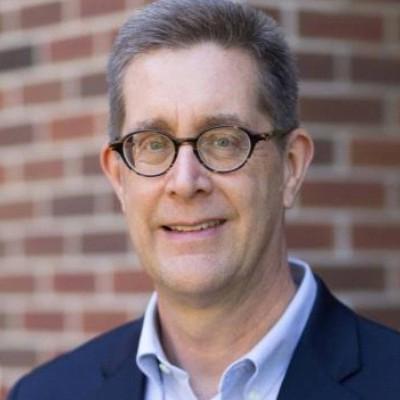
Jeffrey Derby, University of Minnesota, USA
Distinguished McKnight University Professor. His recent research has focused on melt growth of II-VI semiconductor crystals, step dynamics and instability during solution growth, particle and bubble phagocytion during silicon and sapphire growth, and high-pressure growth processes of single crystal diamond and Group III nitrides. Large-scale numerical simulations and high-performance computing are being applied to understand continuum transfer, phase transitions and reactions in advanced material processing.
Surfaces, interfaces and microscopic models: Molecular dynamics, Monte Carlo
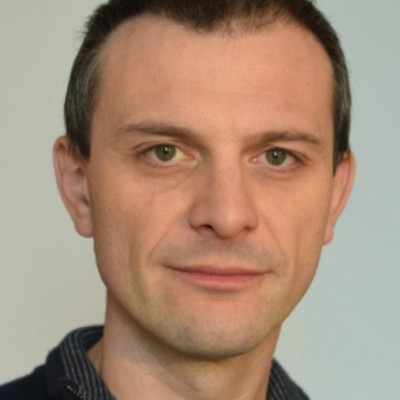
Roberto Bergamaschini, Milan Bicocca University, Italy
He specializes in modeling crystal growth processes, from atomic (kinetic Monte Carlo) to continuum methods (partial differential equation systems and phase fields). Development and imple mentation of state-of-the art modeling approaches based on advanced numerical methods for the solution of dynamical problems in semiconductor physics, including elastic and plastic relaxation effects, alloy intermixing and surface kinetics. Study of morphological and compositional properties in low-dimensional systems (films, nanomembranes, nanowires), precipitates, micro-crystals, aimed at supporting, interpreting and predicting experiments. Author of 39 publications in international peer-reviewed journals with about 500 citations and h-index 12. Speaker at several international conferences.
Artificial intelligence
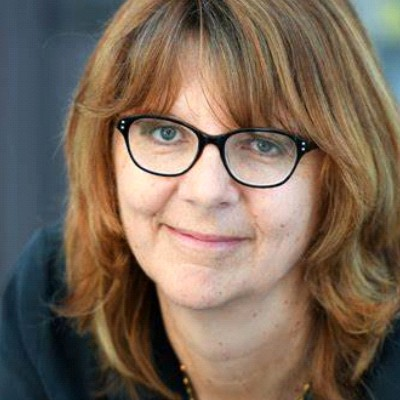
Natasha Dropka,Leibniz IKZ, Berlin, Germany
In 1998,She received her PhD in collaboration with University College London and the Prague Institute of Chemistry and Technology. In 2008, she joined the numerical simulation group at the Leibniz Institute for Crystal Growth (IKZ).Her research interests include crystal growth, material characterization, computational fluid dynamics (CFD), and numerical simulation. Specific directions include germanium crystal growth technology, optimization of germanium growth by Czochralski method, polycrystalline silicon resistivity adjustment, application of machine learning in crystal growth, and MOVPE growth mechanism of β-Ga2O3 films. Covering chemistry, materials science, engineering and other fields.
IMPORTANT SPECIFIC GROWTHS
Bio-crystals
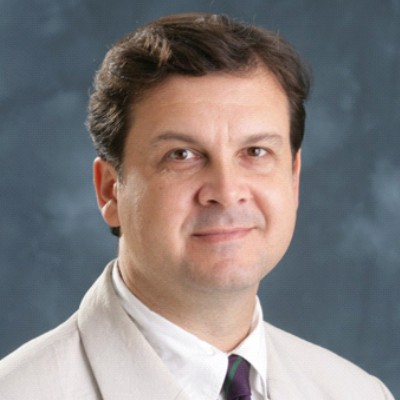
Peter Vekilov,University of Houston,USA
He is concerned with how bioactive substances are formed and how their growth can be controlled and directed. The long-term goal is to advance a fundamental understanding of complex aggregation and crystallization pathways as a platform for designing materials beneficial to humans or inhibiting the growth of disease-causing structures Research is devoted to five main topics: molecular mechanisms of amyloid beta fibrination and toxicity, nucleation of drug crystals, deformation control, control of organic crystal nucleation and growth, and hemoglobin crystallization and malaria parasites.
Case Studys 1,Functional Crystals
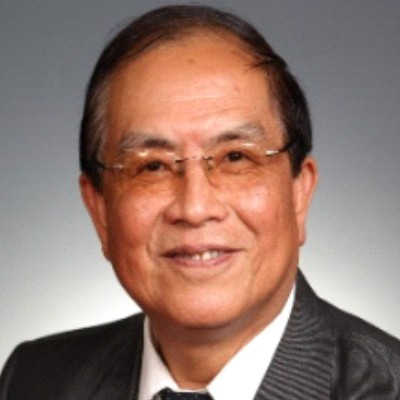
Prof. Jiyang Wang,Shandong University,China
Guided by the academic concept of integrating and leveraging interactions among different functional properties within crystals, he pioneered the development of composite functional crystals. Over the years, he has grown more than 30 types of functional crystals, including the KTP, LGS, and self-frequency-doubling laser crystals. He was the first in the world to commercialize self-frequency-doubling laser crystals, overcame the challenge of layered growth for KBBF crystals to achieve the first successful deep ultraviolet laser output, and proposed a new approach to developing optically rotatory–electro-optic LGS crystals. In collaboration with industry, he has also dedicated himself to refining large-scale crystal growth processes and technologies, thereby promoting technological advancement and yielding significant benefits for enterprises.
Case Studys 2,Artificial Crystals of Photonic/Phononic Crystals: Principles and Applications
Prof. Yanfeng Chen, Nanjing University, China
His research area is in materials physics and chemistry, focusing on the theory, fabrication, characterization, and physical property investigation of artificial crystals including photonic/phononic crystals, metamaterials He found abnormal effects of negative bi-refraction, acoustic evanescent waves, acoustic diode in phononic crystals. He pioneered topological phononics by founding the first acoustic topological insulator, making 2D/3D/4D acoustic topological insulators, and fabricating topological insulator chips on surface acoustic waves, and establishing elastic wave topological insulator. He carried out works on photonic crystals by finding the parity-time symmetric photonic crystal, Dirac semimetal photonic crystal, and 3D/4D magnetic-optic photonic crystals. He won Second Prize of the National Nature Science Award of China. He published 300 rereferred papers with over 16000 citation. He owned 40 China patents and 4 USA patents. He leaded his team to explore making acoustic metamaterials as sound-absorbing and sound-insulting materials and having successfully applied them to industry.
Case Studys 3,Relaxor Ferroelectric
Prof. Haosu Luo,Shanghai Institute of Ceramics, Chinese Academy of Sciences
He conducted a systematic study of the high-temperature phase structure and phase stability of the PMNT system, reporting the high-temperature phase diagram. He has significantly contributed to the growth and development of piezoelectric single crystals, especial for the growth and practical application of PMN-PT single crystals in the world. His research interests are involved the growth of relaxor-based single crystals, lead free piezoelectric single crystals, and their device applications on ultrasonic transducers, infrared detectors, ME magnetic sensors. He has involved more than 600 publications.